- It integrates risk management, climate science, and technology to anticipate the impacts of climate change on suppliers and operations.
- The system is being developed in partnership with the IMN and the CNE, and positions FIFCO as a regional leader in climate adaptation.
Faced with a scenario of increasingly frequent extreme events, FIFCO strengthened its Early Warning System (EWS) as part of its Climate Strategy. This project consolidates the company as a pioneer in Central America in preventive climate risk management and supply chain continuity, especially in the food and beverage sector.
Climate risks, associated with phenomena such as droughts, floods, temperature variability, and extreme events, represent one of the main threats to agricultural production, transportation, raw material supply, and product distribution. In the consumer industry, these impacts can translate into operational disruptions, increased costs, and loss of competitiveness, affecting both companies and supplier communities.
According to the State of the Nation Report, in 2024 the country reached a record 1,610 disasters associated with climate phenomena. That same year, the economic losses resulting from the storm caused by Hurricane Rafael were estimated at ₡352 billion, highlighting the urgent need to strengthen the capacity for prevention, management, and mitigation of climate impacts in all productive sectors.
Under this premise, since 2023, FIFCO has been developing the project “Supply Chain Continuity in the Face of Climate Impact,” a strategic initiative aimed at identifying, assessing, and managing the climate risks faced by its business units and value chain. The objective is to reduce vulnerabilities, anticipate critical scenarios, and ensure operational stability in a context of accelerated climate change.
“Climate adaptation is a prerequisite for ensuring business continuity and the security of our supply chain. Anticipating risks allows us to protect people, our suppliers, and the environment, and to make timely decisions based on reliable technical information,” said Maria Pía Robles, FIFCO’s Director of Corporate Relations.
Risk assessment and supplier strengthening
As part of the project, FIFCO identified the most relevant suppliers for its business units, as well as those most vulnerable to climate impact. In 2025, the company implemented a tool based on the Climate Vulnerability Index methodology of the global risk advisory firm Maplecroft.
The results showed that 18.2% of participating suppliers have high climate resilience, 45.5% are at a resilient level, while 36.4% show low resilience. For the latter group, FIFCO designed and implemented individualized adaptation plans to strengthen their capacities and practices in the face of climate risks.
These plans focus on strengthening suppliers’ capacities through awareness-raising, training, and climate risk management, incorporating mitigation and adaptation measures to ensure resilience and business continuity. As support, FIFCO provided a practical toolkit that allows for the assessment of climate resilience, the anticipation of events that may affect logistics, and the recording of operational impacts linked to climate phenomena.
Early Warning System: science, data, and coordination
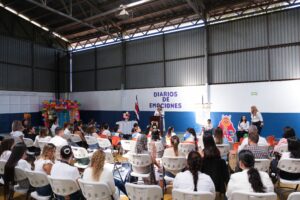
Complementarily, FIFCO launched its Early Warning System, backed by the National Emergency Commission (CNE) and developed in collaboration with the National Meteorological Institute (IMN). The system integrates georeferenced information on areas with the greatest climate vulnerability in Costa Rica, based on the Google Earth platform, with the purpose of supporting strategic decision-making during extreme events.
The critical regions identified include the Caribbean, the Northern Zone, the North, Central, and South Pacific, as well as the Central Valley, each with specific risks such as floods, hurricanes, droughts, heat waves, and landslides. The EWS was presented to local suppliers to incorporate the geolocation of their plants, distribution centers, and farms, cross-referencing this data with climate vulnerability maps using geographic information systems. The goal is to anticipate meteorological risks and optimize and strengthen the response capacity to extreme events. In addition, it establishes an agile communication channel between the Distribution areas, FIFCO’s Positive Environmental Value team, and each supplier’s points of contact, facilitating informed decisions in real time.
Between 2007 and 2024, Costa Rica ranked as the second country in Central America and the Dominican Republic with the most climate change adaptation initiatives, more than 50% of which focused on soil management, resilient crops, and food safety. With this strengthening of the Early Warning System, FIFCO enters 2026 reaffirming its leadership in sustainability, innovation, and risk management, demonstrating that climate adaptation protects operational continuity, strengthens food safety, and generates shared value for communities and the country.